Tag Archive for: insects control

Fruit Flies in the Nottingham hospitality sector

Fruit flies are a persistent problem in commercial kitchens, bars, and restaurants, especially in the summer. They are more than just an annoyance; they can quickly ruin a restaurant’s reputation, lead to failed health inspections, and disrupt business. But with the right preventative measures and expert pest control support, you can keep these tiny pests at bay.

To prevent fruit flies in restaurants and commercial kitchens, cleanliness, food storage, and strict waste management are essential. Store food in airtight containers, clear spillages quickly, fix leaks and throw away rotting food to avoid an infestation.

In this blog, we’ll give you some practical advice on preventing fruit flies, from proper food storage to fixing leaks and maintaining a clean environment.

For professional fruit fly control services in Nottingham and the surrounding areas, contact the experts at NG Pest Control.

Why is it important for Nottingham hospitality businesses to get rid of fruit flies?

One of the first rules in hospitality is cleanliness. Most customers simply won’t stand for anything less than pristine, especially when it comes to dining. A cloud of fruit flies darting about not only creates an unpleasant atmosphere but can also make customers doubt the cleanliness of your restaurant. Cue: complaints, bad reviews or even lost business.

Aside from being a nuisance, fruit flies carry bacteria and can easily contaminate food and drinks. This is clearly a risk to patrons and can result in health code violations and even the closure of your restaurant.

Fruit flies, though small, can quickly turn into a large problem. A single female fruit fly can lay up to 500 eggs in her short lifespan, and those eggs can hatch in as little as 24 to 30 hours. This rapid reproduction means that fruit fly populations can multiply like crazy within just a few days, quickly turning a small issue into a full-blown infestation.

What attracts fruit flies to a restaurant?

Fruit flies mainly feed on organic material. These tiny pests are drawn to decaying food, sugary liquids, and damp areas, so a busy kitchen or bar is like hitting the jackpot. Let’s take a look at the causes of fruit flies in more detail.

Food sources

Fruit flies just can’t resist fruit and vegetables, especially ones that are overripe or starting to decay. Rotting food left out on counters or in bins overnight is an open invitation for fruit flies to start laying eggs.

Remember, a single fruit fly can lay up to 500 eggs, which can rapidly escalate into a full-blown infestation.

Moisture and drainage issues

Moist areas are another ideal breeding ground for fruit flies. Standing water and spills are obviously a problem, but any moist area can harbour food and drink residue, like plug holes, beer taps, drip trays, bar mats and ice wells. This makes regular wipe-downs essential.

Poor waste management

You can’t afford a lax attitude towards rubbish disposal when fruit flies are around. To prevent an infestation, proper waste management is important. Make sure that food waste is disposed of regularly and quickly and that bins are kept clean and sealed.

What is the best solution for flies in a restaurant?

To prevent and eliminate fruit flies in a restaurant, you need a disciplined approach to storage, waste management and cleaning.

Here are our top tips for preventing fruit flies in your hospitality venue:

Food storage

Proper food storage is critical. Always store open food in airtight containers. Rotting food should be thrown away immediately, as these are like nectar to fruit flies. Implementing a strict First In, First Out (FIFO) system can help ensure older produce is used first, preventing decay and the potential for fruit fly breeding.

Cover up liquids

Syrup and liquor bottles can attract flies if you don’t cover them. Make sure all bottles have pour spouts or are sealed after each use. Beer taps should be covered when not in use, as fruit flies are attracted to the sweet, sugary residue. Cleaning beer drip trays and frequently wiping down bar mats is also essential.

Clean and sanitise food preparation stations

Cleanliness is key in preventing fruit fly infestations. Food preparation stations, counters, and cutting boards should be wiped down regularly. Spillages, such as sugary syrups and alcohol, should be cleaned up immediately. Also, it goes without saying that regular hand washing is essential to avoid spreading germs and food and drink residue that could attract fruit flies.

Throw away overripe fruit

Ripened fruit and vegetables are a magnet for flies, so inspect fresh produce regularly and throw away any that are overripe or showing signs of decay. Make sure you store fruits correctly and that they’re not left out for long periods.

Fix leaks and clean up spilled liquids

Spillages and water leaks, whether from taps, sinks, beer taps, or refrigeration units, can create moist areas that are highly attractive to fruit flies. Ensuring your equipment is in good working order and fixing any leaks promptly will go a long way in preventing a fruit fly problem.

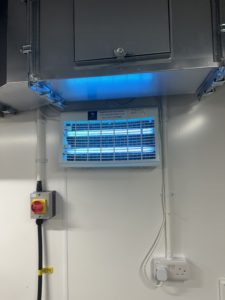
Discreet Fly Control Units

At NG Pest Control, we can advise, install and service many types of fly control units, from discreet front of house units, to larger more commercial grade units for kitchens, cellars and back of house areas.

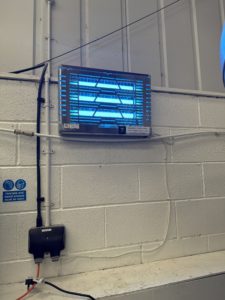
Commercial contract pest control electric fly killer unit in Nottingham premises    NG Pest Control Electric Fly Killer in kitchen

How does a pest control expert get rid of fruit flies?

Sometimes, preventative measures just aren’t enough when it comes to fruit flies. Despite your best efforts, you might still suffer from infestations from time to time. However, a pest control company like NG Pest Control can help.

We start by identifying the specific type of fly infestation you’re facing – whether it’s fruit flies, house flies, or drain flies – and develop a targeted strategy for eliminating fruit flies at their source.

We control flies using various methods targeting adult flies, fly larvae, and fruit fly eggs. The best course of treatment depends on the severity of the infestation. We prefer to use non-toxic treatments, like fruit fly traps, but insecticides are usually necessary to disrupt the fruit fly life cycle and stop them from coming back. While the chemicals we use are professional grade, they are completely safe for humans and animals.

Using Electric Fly Control Units to get rid of Fruit Flies

Whilst our fly control units will remove adult fruit flies, along with drain flies and house flies – the investigation in to the source of the issue is still a necessity, as without the removal of the source of the issue, fruit flies will continue to breed.

Get rid of your fruit fly infestation with NG Pest Control

Trust us here at NG Pest Control to help you maintain a pest-free restaurant. We understand the challenges that restaurant owners face, and our experienced team is ready to support you with expert advice and professional pest control services to get rid of and prevent fruit flies.

For more information or to book a consultation, contact us today.

Wasp Nest removal in Nottingham (copy)

Wasp Nest removal in Nottingham. Wasps make their nests from chewed wood pulp and saliva, giving them distinctive papery walls. Nests are usually built in sheltered spots with easy access to the outside. You can often find wasp nests in wall cavities, roof spaces, under eaves, in bird boxes, sheds or garages. To locate a […]

Dealing with a wasp nest in Nottingham

How to deal with a Wasp Nest in Nottingham Properties

How do you spot a wasp nest? What should you do when you find one on your property?

Here are the steps that you need to undertake.

Signs you have a wasp problem or a wasp nest in Nottingham

The best indicator of a wasp infestation in your property is seeing high numbers of these insects outdoors. This simply means that there is a nest on your property or nearby.

A single nest can contain thousands of these insects; it is highly advisable to destroy the nest early in the year before they become more aggressive and increase the risk of harming yourself, family and pets.

Identifying wasp nests

Firstly, we should consider – Are they actually wasps? or Bees?

Over time, the nests become larger, with adult insects becoming more aggressive in their defence of their home.

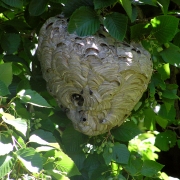
Nottingham wasp nest within a tree

European hornet nests are often found in natural cavities.

Locating the nest

The easiest way to find where wasps nest is to follow their flight path. If you suspect that these insects have built a nest on your property, it is a good idea to keep windows shut. On the other hand, if you believe that these insects have built a nest in your attic or within a wall cavity, enlist the aid of professionals.

Wasps build nests out of chewed wood. This gives the nest a papery exterior.

The nest is built by the queen. Eventually, the nest grows larger as the first batch of eggs matures and the young become workers.

Around summer, the size of the nest becomes considerably larger.

Who should take care of the wasp nest?

If you have found the location of the wasp nest on your property, should you attempt to eliminate it by yourself or get expert help?

You should never attempt to remove a nest on your own if you are sensitive to the sting of these insects. Attempting to remove the nest can disturb the wasps which, in turn, can lead to an attack and stings.

Need help in dealing with wasp nests in a safe and effective manner?

More info on wasps can be found HERE

Ask help from a trusted, local company such as ourselves. NG Pest Control.

You can contact us here for a booking – all at a set price of £80.00 inclusive of the call-out and any work we have to carry out on a single wasp nest.

Why am I seeing wasps so early in the year?

Why Do I Have Lethargic Wasps?

There are a range of reasons that you might encounter lethargic wasps in your home, and in all these scenarios, it is likely that you have a nest nearby that you may have missed whilst it was active in the summer months. It is assumed that wasps usually make their nests outside, however they are quite common in sheds, lofts, and other sturdy wooden spaces.

Wasps can build their nests in unexpected places as they can be shaped around or in between wooden beams and other obstacles.

Warm winters

If you’re finding one or two lethargic wasps, it is likely you have stumbled across queens that have come out of hibernation too early. Queens should wake up when spring comes around, but if the weather is unexpectedly warm and they wake up early, they end up starving due to a lack of suitable food.

Life Cycle of the Wasp

Understanding the life cycle of the typical wasp can help you to understand why wasps are coming into your home when they are. It is unlikely that you will see an active wasp nest in the winter months, and the only wasps that are usually encountered are queens hibernating and waiting out the cold.

When spring comes around, the queens will come out of hibernation, and start looking for a new location to build a nest. Many queens do die in hibernation, but this is usually down to predation by other insects such as spiders rather than the cold itself. Whilst we might sometimes like a warmer, milder winter, these are bad for queen wasps. Warmer winters mean that the queens come out of hibernation earlier and end up starving due to a lack of available food.

It’s commonly believed that wasps eat insects, but this isn’t the case. The mouths and digestive systems of wasps are not actually capable of eating any solid foods. Instead, they have a series of tubes designed to suck liquids, such as nectar, much like a honeybee has. The mandibles are instead used to bite other wasps (in defence or in attack), or to catch and dissect prey to feed their young. The wasp larvae then regurgitate a sugary liquid that is made up of the chitin from the insect exoskeletons that is then fed back to the adult wasps.

Once a queen that has survived the winter months has started building a new nest, she will create cells in which she will lay eggs, in a similar structure to that found in a beehive. Once the eggs begin to hatch, she will find food to feed them whilst also building more cells and laying more eggs. The protein-rich insect diet means that young wasps grow up very quickly. Once the first generation of adult wasps have grown up, they will take over building the nest and caring for the young. This leaves the queen free to lay more eggs and control the nest.

Towards the end of the summer, the nests reach their maximum size, and the queens will lay queen eggs and unfertilized drone eggs. Each nest can produce between 1000 and 1500 new queens. Once these eggs have laid, the reigning queen will not lay any further eggs. Once these last eggs have hatched, the male drones and new queens will travel from the nest to mate. The males recognise queens from their own colony and avoid mating with them to prevent interbreeding. After mating, the new queens find somewhere to hibernate, and the male drones die.

Wasp Nest Removal / Treatment

We do not usually attend to any active wasp nests until July/August at the earliest – this is due to the very early nests being difficult to locate and these can be within wall cavities, loft insulation, roof timbers etc. As the nest develops it becomes easier to locate and therefore we can offer a more guaranteed rate of success.

Cluster Flies and the pest control treatments available in Nottingham


Pests are irritating, unsightly and insanitary – which is why finding an infestation is worrying – and finding cluster flies is no exception. Cluster flies are 8mm long and are a dark grey colour, with small patches of gold hair on their back and long wings. Appearing in spring, cluster flies will begin to lay eggs outside and will hibernate in your home around nearing winter, around August time. To get rid of cluster flies you can use your vacuum cleaner, aerosol fly killer or call your local professionals who will be able to use smoke bombs or foggers for more effective results.

HOW DID CLUSTER FLIES GET INTO MY HOME?

Cluster flies make their way into the home through doors and windows, around loose electrical outlets, under roof eaves, openings around cables, pipes and through vents.

How to identify cluster flies

The obvious sign of a cluster fly infestation is to see a large quantity of lame or dead flies. It’s also very common to find them in your loft, in sunken spot lighting or under insulating felt layers. Cluster flies typically return year after year, unless eaves and other entry ways are adequately sealed.

I’ve found attic/loft flies – what do I do?

If you find cluster flies in your attic, try to prevent these pests by using a ‘Citronella’ fragrance wick that emits a smell into this area, which can work to deter these flies from returning. Alternatively, you can spray these insects with fly killer and vacuum the area afterwards. If your problem still returns in August/September time, call your local pest controllers who will be able to utilise more effective methods, that’ll eliminate your pest problem.

What’s the most effective cluster fly treatment?

The most effective cluster fly treatment are smoke bombs and foggers but it’s recommended to have a professional do this because the fumes can also be harmful to human respiratory systems. Expert pest controllers will have all the equipment to ensure safe and effective cluster fly treatment, so you needn’t risk your health and you’ll be able to enjoy a fly-free home.

HOW LONG DO CLUSTER FLIES STAY?

Throughout Autumn, you will find these in large congregations hibernating in attics, sheds and garages but as soon as spring comes around, they will make their way back outside.

Methods for getting rid of cluster flies

There are many things you can do to remove cluster flies in a property, some are more effective than others but we have made a list of things you can do to remove your cluster fly infestation.

  • Insect spray
  • ‘Citronella’ fragrance wick
  • Vacuum cleaner
  • Sealing all openings around doors, windows, eaves, pipes, electrical sockets…
  • Foggers (performed by a trained professional)
  • Smoke bombs (performed by a trained professional)
  • Electric fly killers
  • Fly boxes

Make sure your home is tidy and clean, cluster flies love food and drink spills, stagnant water, open rubbish bins and pet excrement. If you’re aware of having a cluster fly issue, install fly screens over your windows, to prevent them from making their way inside.

What are the risks/diseases of cluster flies?

Cluster flies have no direct health effects on humans but the sheer amount of flies produce a noticeable amount of excrement, that’ll stain walls, floors and belongings, and produce a strong and unpleasant odour.

Cluster flies are an annoyance in domestic settings but pose a big threat to commercial settings, such as restaurants. Cluster flies can contaminate food preparation areas and even food, so it’s important to stop preparing food until the pest problem is completely eliminated. Otherwise, it’s likely they will face fines, a bad reputation or worse, shut down by health and safety officers.

What’s the difference between cluster flies and houseflies and bluebottles?

It’s very hard to distinguish between which fly is which, other than the size of the fly, but we’re here to help you identify the most common flies.

  • Cluster flies – typically 8mm long, which is slightly larger than the usual housefly. Cluster flies dark patches are darker in colour than that of a housefly but cluster flies have patches of short gold hair on their thorax. Cluster flies are mainly recognisable by their laboured movement.  
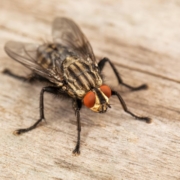
  • Houseflies – these flies have light grey bodies and clear black, vertical lines on top. Houseflies are constantly in search for available food and water sources and are more threatening to our health because they regularly rummage through bins and land on any excrement they can find.
  • Bluebottles – these are the same size as houseflies, their bodies are a petrol colour, often blue/purple when they catch the light. Adult bluebottles have big red eyes and long, transparent wings. Bluebottles are also a health concern because they land on excrement and rotting flesh, so it’s important to remove them as soon as you can and to keep all food covered to prevent contamination.

For further assistance or to arrange a callout to treat a cluster fly infestation, please call our office on 0115 7770110 or contact us by clicking the link below.

Contact Us

Nottingham wasp nest removal

Wasp Nest Removal Nottingham:

Simple (And Essential) Safety Measures


The arrival of warm weather marks the emergence of wasps and other pesky pests. Hence, it is quite natural for you to spot a wasp nest in your home or garden.

Although this emergence is not news, it’s of utmost importance to make informed decisions for wasps nest removal.

Wasps usually remain in their little world, minding their own business, unless meddled with. 

Once alerted, wasps can grow aggressive, attacking anyone entering into their territory, and sting multiple times.

Consequently, removing wasps’ nests without professional care is playing with fire.

This is one of the reasons we advise our clients on the best solutions and continue helping them with wasps nest removal in Nottingham, ensuring safety and timely operation.

Therefore in this blog, we are going to educate you on some essential dos and don’ts once you discover a nest, what are some common myths, the best solution for wasp nest removal and ways to prevent the same.

So without further ado, let’s explore.

Common Wasp Nest Removal Myths

You Can Destroy a Wasp Nest at Night

Many homeowners try to get rid of wasp nests at night, assuming it is an effective way. 

While there’s no denying the fact that wasps retire to their homes at dusk and stay there the entire night; that’s not the complete story.

Using bright lights or any other shiny object can alert the wasps and make them grow aggressive within the blink of an eye.

Often, it results in a swarm of wasps attacking the person until they feel safe again.

Therefore, this is not the best method to get rid of a wasp nest.

Wasp Stings are Harmless

Wasp stings are different from that of bees’. Wasps inject venom into the skin when they sting. Moreover, wasps can sting multiple times after their first attack, while bees sting only once. 

To put it plainly: wasp sting is painful and very irritating. 

Although rare, wasp stings can prove to be fatal, especially when you are allergic to stings.

What’s more critical is – an allergy to stings can be acquired, even if you never had them before.

Therefore, it is in your and your family’s best interest to stay at a safe distance from the nests.

Lastly, the wasp sting can be extremely dangerous, and one should not neglect them.

Fake Nests Keep Wasps at Bay

It is said that if you put artificial nests in your garden or at home, you can keep wasps at bay. 

This remedy sprouts from the assumption that wasps do not build nests in the immediate vicinity.

That’s not true since some experts have observed wasp nests right next to each other.

Moreover, for this method to work, artificial nests have to be placed in a dozen places, including places of potential nest production like the attic, garage, eaves and the like. 

Some of these places can be hard to reach for accommodating an artificial nest.

Now that we have burst some common myths relating to wasp nest removal let’s look at some essential dos and don’ts.

Essential Do’s and Don’ts of Wasp Nest Removal

Once a wasp nest is discovered, you might find yourself pondering over the idea of removing it yourself.

The truth is: not only does that situation threaten your safety but can put your property at risk too.

Therefore, professionals highly advise against it; but, don’t fret, below mentioned are the essential safety measures you must know of.

What Can You Do?

Contact a Professional

Regarding all the safety concerns, it is highly recommended to seek professional help in eradicating wasp nests from your home.

With our wasp nest removal services in Nottingham, including other areas, we help our clients remove wasp nests in the most systematic and timely manner.

We do this day in and out, hence, are accustomed to treating and removing a wasp nest.

Ask for Expert Advice

Once you spot a wasp nest in your home or suspect it may be hidden at someplace, it is wise to seek expert advice.

Not only will you get a viable solution, but you will also save yourself from trouble and potential damage.

Many people try DIY methods that, most of the time, do not land the desired results. 

Not only taking matters into your own hands is a very risky affair, but it could also put your neighbour, family, kids and pets at risk as well.

Again, it is best to leave the crucial decision – how to remove wasp nests without getting stung – to the professionals. 

Approach the Nest With Protective Gear

Drastic times call for drastic measures and if you ever find yourself approaching the nest, ensure your safety by wearing appropriate gear and have an exit strategy too.

Wasps sting can be quite traumatising. 

Professionals always wear safety gear while carrying out the process of wasp nest removal, putting themselves in a safe position where there is absolutely no threat of getting stung.


What Must Not Be Done?

Now let’s look at some methods that should not be followed under any circumstances:

Attempt to Burning the Nest

Are you aware that wasp nests are highly flammable?

That’s correct, and they are made by wasps chewing the wood and producing the nests, resulting in a flammable outcome.

This should give you a fair idea of how burning the wasps’ nest could backfire.

Indeed, this method will not kill all the wasps and the remaining offensive wasps will attack.

Moreover, if your nest is attached to a tree or a wall, they too could catch fire, leading severe damage to your property.

Attempt to Drowning the Nest

Similar to the fire situation, drowning the wasp nest is also not going to kill any/all of the beetles inside it.

Doing so will only trigger the offensive behaviour of wasps, which is unlikely to end in any favourable condition.

Spraying water or drowning the nest are observed as practical methods, but as a matter of fact, this will do more harm than good.

The said method also has the potential to damage your property, especially smaller spaces like the attic where water can ruin ceiling plasterboards and attic beams.

Attempt to Striking the Nest

Hitting the wasp nest in an attempt to make wasps go away is not a smart idea either.

Using any hard object such as a baseball bat indicates one is on dangerous ground.

This way, the wasps will not get scared, instead, will become aggressive and attack. Therefore, it is highly advisable not to get too close to the nest and leave the work to professionals.

Don’t Try to Catch it or Wrap it:

Lastly, attempting to catch the nest or wrapping it in a bag isn’t ideal either. Once escaped, the offensive wasps will leave no stone unturned to attack the person, making fewer chances of escaping.

Stay at a safe distance from wasps at all times and call for professional help as and when required.

By carrying out any of the above-said activities, you are putting yourself at potential risk because even after you happen to destroy the nest, wasps can fly away and build another. 

The newly built nest could go unnoticed, resulting in accidental interaction with it.

Now, let us unleash the bright side: how to prevent wasp nests and the best solution for wasp nest removal without getting stung.

How to Prevent Wasp Nests?

  1. Seal all the potential entry points and regularly maintain your home and garden
  2. Bins can attract wasps more than anything else. Ensure you are keeping them clean always and at a distance from doors and windows.
  3. You can use peppermint oil or plant peppermint to repel wasps.
  4. Instal fly screens on openings such as windows and doors to keep wasps at bay.

Let us now understand what the best way of getting rid of wasp nests is.

Best Method of Wasp Nest Removal


To get rid of the wasps’ nest without being stung, it is highly recommended to seek professional help.

Our clients boast of wasp-free summers after our wasps’ nest removal in Nottingham. The team of our technicians are trained to deal with all types of wasps and use only the best-in-class, environment-friendly products.

Along with wearing protective gear, we take every possible measure to keep you, your family and pets at a safe distance at all times of the operation.

Our paramount priority is your safety. Let us help you get rid of pesky invaders.

Wasp Nest Removal, Nottingham

We, at NG Pest Control have delivered impeccable services for years, eliminating all pest issues while keeping the bar of customer satisfaction high.

Give us a call to get rid of all your pest problems, including wasp nest removal, throughout all Nottingham areas. 

We offer a guarantee AND set prices for all work.

Get your home free of wasps all summer long, and keep yourself and your family on safe ground.

Contact us now on 0115 7770110

Dealing with a Nottingham wasp nest

How to deal with a Wasp Nest on Your Nottingham Property

How do you spot a wasp nest? What should you do when you find one on your property?

Here are the steps that you need to undertake.

Signs you have a wasp problem or a Nottingham wasp nest

The best indicator of a wasp infestation in your property is seeing high numbers of these insects outdoors. This simply means that there is a nest on your property or nearby.

A single nest can contain thousands of these insects; it is highly advisable to destroy the nest early in the year before they become more aggressive and increase the risk of harming yourself, family and pets.

Identifying wasp nests

Over time, the nests become larger, with adult insects becoming more aggressive in their defence of their home.

Nottingham wasp nest within a tree

European hornet nests are often found in natural cavities.

Locating the nest

The easiest way to find where wasps nest is to follow their flight path. If you suspect that these insects have built a nest on your property, it is a good idea to keep windows shut. On the other hand, if you believe that these insects have built a nest in your attic or on a wall, enlist the aid of professionals.

Wasps build nests out of chewed wood. This gives the nest a papery exterior.

The nest is built by the queen. Eventually, the nest grows larger as the first batch of eggs matures and the young become workers.

Around summer, the size of the nest becomes considerably larger.

Who should take care of the wasp nest?

If you have found the location of the wasp nest on your property, should you attempt to eliminate it by yourself or get expert help?

You should never attempt to remove a nest on your own if you are sensitive to the sting of these insects. Attempting to remove the nest can disturb the wasps which, in turn, can lead to an attack and stings.

Need help in dealing with wasp nests in a safe and effective manner?

Ask help from a trusted, local company such as ourselves. NG Pest Control.

You can contact us here for a booking – all at a set price of £60.00 inclusive of the call-out and any work we have to carry out on a single wasp nest.

An invasion of Garden Ants

Pest Advice for controlling Garden Ants

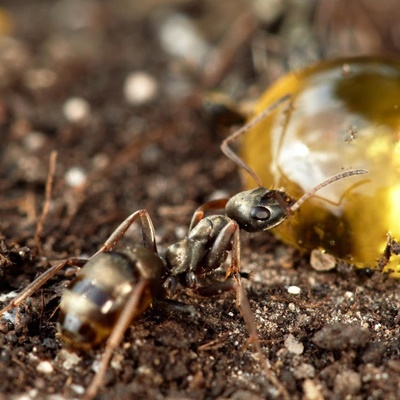
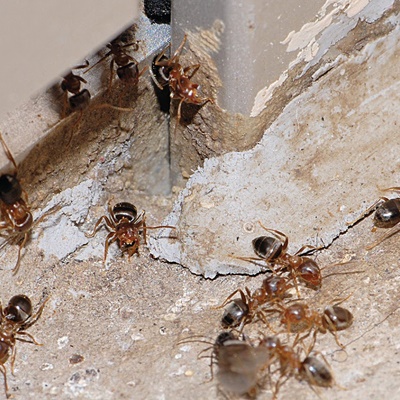
The commonest species that invades houses is the Black Garden Ants, which is actually very dark brown. All ants have the main divisions of the body (head, thorax, abdomen) distinctly separated by very narrow waists and have a sharp elbow joint in their antennae. They are highly organised social insects. It is the foraging worker ants that invade buildings in search of food. These are from 3 to 5mm in length and are attracted to sweet foodstuffs which they take back to the nest to feed to the larvae and queen.

The so-called ant’s eggs sold for aquaria fish are actually the pupae. Flying ants are the reproductive males and females. These mating ants are winged and have a nuptial swarming flight during only a few days in July or August. Mating takes place in the air and the female then seeks out a nest site where she stays for the winter, laying eggs the following spring in order to start up a new colony.

Ants-1

How to deal with Ants

First, find the nest entrances. These are indicated by small piles of earth pellets or can be located by watching the ants moving back and forth from nest to food.

Pouring a kettle of boiling water over the nest site is a first-aid measure.

Some products cause the workers to destroy their own nests, for example, sugar based liquid bait. The workers are attracted to the bait and carry the insecticide back to the larvae and queen. Some centrally heated blocks of flats may be troubled by the much smaller tropical Pharaoh’s Ant, which prefers protein to sweet foods and has multiple – and often inaccessible – nests within the building structure.

ants-3

Ghost Ants are becoming more common in heated buildings. These are a similar size to Pharaoh’s ants and is pale coloured with a dark thorax and head. Control must be left to professional operators.

Having problems with ants?

Contact us on 0115 777 0110 or 07412 637064 to book in a callout and treatment.