Tag Archive for: Wasps

Wasp Nest removal in Nottingham (copy)

Wasp Nest removal in Nottingham. Wasps make their nests from chewed wood pulp and saliva, giving them distinctive papery walls. Nests are usually built in sheltered spots with easy access to the outside. You can often find wasp nests in wall cavities, roof spaces, under eaves, in bird boxes, sheds or garages. To locate a […]

Dealing with a wasp nest in Nottingham

How to deal with a Wasp Nest in Nottingham Properties

How do you spot a wasp nest? What should you do when you find one on your property?

Here are the steps that you need to undertake.

Signs you have a wasp problem or a wasp nest in Nottingham

The best indicator of a wasp infestation in your property is seeing high numbers of these insects outdoors. This simply means that there is a nest on your property or nearby.

A single nest can contain thousands of these insects; it is highly advisable to destroy the nest early in the year before they become more aggressive and increase the risk of harming yourself, family and pets.

Identifying wasp nests

Firstly, we should consider – Are they actually wasps? or Bees?

Over time, the nests become larger, with adult insects becoming more aggressive in their defence of their home.

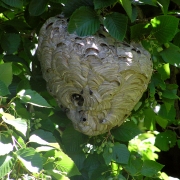
Nottingham wasp nest within a tree

European hornet nests are often found in natural cavities.

Locating the nest

The easiest way to find where wasps nest is to follow their flight path. If you suspect that these insects have built a nest on your property, it is a good idea to keep windows shut. On the other hand, if you believe that these insects have built a nest in your attic or within a wall cavity, enlist the aid of professionals.

Wasps build nests out of chewed wood. This gives the nest a papery exterior.

The nest is built by the queen. Eventually, the nest grows larger as the first batch of eggs matures and the young become workers.

Around summer, the size of the nest becomes considerably larger.

Who should take care of the wasp nest?

If you have found the location of the wasp nest on your property, should you attempt to eliminate it by yourself or get expert help?

You should never attempt to remove a nest on your own if you are sensitive to the sting of these insects. Attempting to remove the nest can disturb the wasps which, in turn, can lead to an attack and stings.

Need help in dealing with wasp nests in a safe and effective manner?

More info on wasps can be found HERE

Ask help from a trusted, local company such as ourselves. NG Pest Control.

You can contact us here for a booking – all at a set price of £80.00 inclusive of the call-out and any work we have to carry out on a single wasp nest.

Wasp Nest removal in Nottingham

Wasp Nest removal in Nottingham.

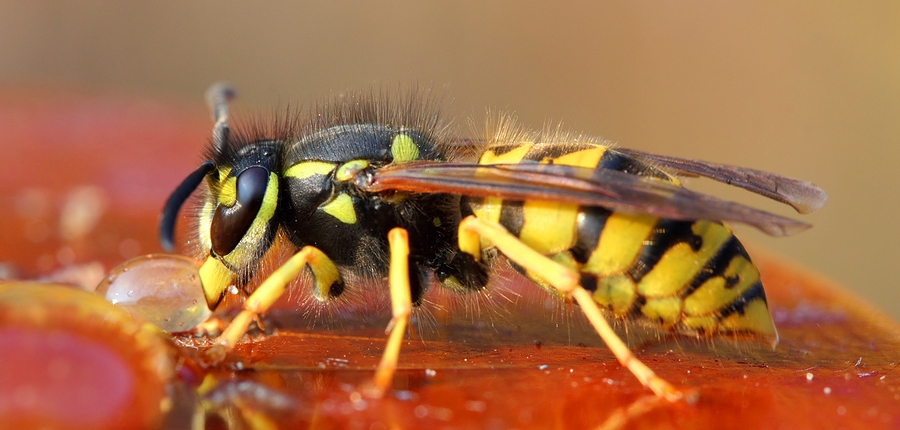
Wasp feeding. We offer wasp nest removal treatments across Nottinghamshire.

Wasps make their nests from chewed wood pulp and saliva, giving them distinctive papery walls.

Nests are usually built in sheltered spots with easy access to the outside. You can often find wasp nests in wall cavities, roof spaces, under eaves, in bird boxes, sheds or garages.

To locate a nest, carefully watch the flight path of the returning wasps, this becomes easier later in the summer as the numbers of wasps increase.

At first, a wasp nest will start off very small.

When a Queen wasp starts to build a nest in spring it is usually about the size of a walnut or golf ball.

As summer progresses the nest will grow rapidly in size as the number of wasps increase. A nest can become the size of a football, or even bigger in some cases.

It is best to treat a nest earlier in the year before numbers increase and the wasps become more aggressive.

It is possible to confuse wasps with bees. However the treatment available for a wasp nest and a bee hive differ.

Treatments for a wasp nest are far more common and can be carried out professionally by Our Wasp Nest Removal experts, quickly and safely.

Some facts about wasps

We all know that wasps can sting repeatedly, but here are some facts about wasps which you may not know.

1. The venom in wasps contains a pheromone that causes other wasps to become more aggressive. Try not to swat one near its nest or other wasps.

2. The sting of a wasp should wear off within 24 hours but for a small minority of people the venom in their sting causes anaphylactic shock which can be fatal.

3. An ordinary sting can be treated with deodorant containing aluminium.

4. Wasps live in colonies that form self-contained communities, each following a caste order of queens, males and workers.

5. A male wasp is called a Drone. The job of the Drone is to mate with the Queen. After they have fulfilled this mission, they die shortly afterwards.

6. Wasps don’t swarm.

7. European Hornets strip the bark from trees, causing damage to trees and shrubs.

8. Wasps feed their young meat e.g. insect larvae.

9. The only wasps that survive the winter are young fertilised queens. They emerge from overwintering in the spring to build new nests. Initially the queen lays up to a dozen eggs and when they hatch into larvae she feeds them until they become workers. The workers then forage for food, feed the new larvae and defend the nest.

10. In late summer, the colony produces males and new queens. They fly away to mate and the queens then find a place to hibernate. The cold weather eventually kills the males,

Why am I seeing wasps so early in the year?

Why Do I Have Lethargic Wasps?

There are a range of reasons that you might encounter lethargic wasps in your home, and in all these scenarios, it is likely that you have a nest nearby that you may have missed whilst it was active in the summer months. It is assumed that wasps usually make their nests outside, however they are quite common in sheds, lofts, and other sturdy wooden spaces.

Wasps can build their nests in unexpected places as they can be shaped around or in between wooden beams and other obstacles.

Warm winters

If you’re finding one or two lethargic wasps, it is likely you have stumbled across queens that have come out of hibernation too early. Queens should wake up when spring comes around, but if the weather is unexpectedly warm and they wake up early, they end up starving due to a lack of suitable food.

Life Cycle of the Wasp

Understanding the life cycle of the typical wasp can help you to understand why wasps are coming into your home when they are. It is unlikely that you will see an active wasp nest in the winter months, and the only wasps that are usually encountered are queens hibernating and waiting out the cold.

When spring comes around, the queens will come out of hibernation, and start looking for a new location to build a nest. Many queens do die in hibernation, but this is usually down to predation by other insects such as spiders rather than the cold itself. Whilst we might sometimes like a warmer, milder winter, these are bad for queen wasps. Warmer winters mean that the queens come out of hibernation earlier and end up starving due to a lack of available food.

It’s commonly believed that wasps eat insects, but this isn’t the case. The mouths and digestive systems of wasps are not actually capable of eating any solid foods. Instead, they have a series of tubes designed to suck liquids, such as nectar, much like a honeybee has. The mandibles are instead used to bite other wasps (in defence or in attack), or to catch and dissect prey to feed their young. The wasp larvae then regurgitate a sugary liquid that is made up of the chitin from the insect exoskeletons that is then fed back to the adult wasps.

Once a queen that has survived the winter months has started building a new nest, she will create cells in which she will lay eggs, in a similar structure to that found in a beehive. Once the eggs begin to hatch, she will find food to feed them whilst also building more cells and laying more eggs. The protein-rich insect diet means that young wasps grow up very quickly. Once the first generation of adult wasps have grown up, they will take over building the nest and caring for the young. This leaves the queen free to lay more eggs and control the nest.

Towards the end of the summer, the nests reach their maximum size, and the queens will lay queen eggs and unfertilized drone eggs. Each nest can produce between 1000 and 1500 new queens. Once these eggs have laid, the reigning queen will not lay any further eggs. Once these last eggs have hatched, the male drones and new queens will travel from the nest to mate. The males recognise queens from their own colony and avoid mating with them to prevent interbreeding. After mating, the new queens find somewhere to hibernate, and the male drones die.

Wasp Nest Removal / Treatment

We do not usually attend to any active wasp nests until July/August at the earliest – this is due to the very early nests being difficult to locate and these can be within wall cavities, loft insulation, roof timbers etc. As the nest develops it becomes easier to locate and therefore we can offer a more guaranteed rate of success.

Nottingham wasp nest removal

Wasp Nest Removal Nottingham:

Simple (And Essential) Safety Measures


The arrival of warm weather marks the emergence of wasps and other pesky pests. Hence, it is quite natural for you to spot a wasp nest in your home or garden.

Although this emergence is not news, it’s of utmost importance to make informed decisions for wasps nest removal.

Wasps usually remain in their little world, minding their own business, unless meddled with. 

Once alerted, wasps can grow aggressive, attacking anyone entering into their territory, and sting multiple times.

Consequently, removing wasps’ nests without professional care is playing with fire.

This is one of the reasons we advise our clients on the best solutions and continue helping them with wasps nest removal in Nottingham, ensuring safety and timely operation.

Therefore in this blog, we are going to educate you on some essential dos and don’ts once you discover a nest, what are some common myths, the best solution for wasp nest removal and ways to prevent the same.

So without further ado, let’s explore.

Common Wasp Nest Removal Myths

You Can Destroy a Wasp Nest at Night

Many homeowners try to get rid of wasp nests at night, assuming it is an effective way. 

While there’s no denying the fact that wasps retire to their homes at dusk and stay there the entire night; that’s not the complete story.

Using bright lights or any other shiny object can alert the wasps and make them grow aggressive within the blink of an eye.

Often, it results in a swarm of wasps attacking the person until they feel safe again.

Therefore, this is not the best method to get rid of a wasp nest.

Wasp Stings are Harmless

Wasp stings are different from that of bees’. Wasps inject venom into the skin when they sting. Moreover, wasps can sting multiple times after their first attack, while bees sting only once. 

To put it plainly: wasp sting is painful and very irritating. 

Although rare, wasp stings can prove to be fatal, especially when you are allergic to stings.

What’s more critical is – an allergy to stings can be acquired, even if you never had them before.

Therefore, it is in your and your family’s best interest to stay at a safe distance from the nests.

Lastly, the wasp sting can be extremely dangerous, and one should not neglect them.

Fake Nests Keep Wasps at Bay

It is said that if you put artificial nests in your garden or at home, you can keep wasps at bay. 

This remedy sprouts from the assumption that wasps do not build nests in the immediate vicinity.

That’s not true since some experts have observed wasp nests right next to each other.

Moreover, for this method to work, artificial nests have to be placed in a dozen places, including places of potential nest production like the attic, garage, eaves and the like. 

Some of these places can be hard to reach for accommodating an artificial nest.

Now that we have burst some common myths relating to wasp nest removal let’s look at some essential dos and don’ts.

Essential Do’s and Don’ts of Wasp Nest Removal

Once a wasp nest is discovered, you might find yourself pondering over the idea of removing it yourself.

The truth is: not only does that situation threaten your safety but can put your property at risk too.

Therefore, professionals highly advise against it; but, don’t fret, below mentioned are the essential safety measures you must know of.

What Can You Do?

Contact a Professional

Regarding all the safety concerns, it is highly recommended to seek professional help in eradicating wasp nests from your home.

With our wasp nest removal services in Nottingham, including other areas, we help our clients remove wasp nests in the most systematic and timely manner.

We do this day in and out, hence, are accustomed to treating and removing a wasp nest.

Ask for Expert Advice

Once you spot a wasp nest in your home or suspect it may be hidden at someplace, it is wise to seek expert advice.

Not only will you get a viable solution, but you will also save yourself from trouble and potential damage.

Many people try DIY methods that, most of the time, do not land the desired results. 

Not only taking matters into your own hands is a very risky affair, but it could also put your neighbour, family, kids and pets at risk as well.

Again, it is best to leave the crucial decision – how to remove wasp nests without getting stung – to the professionals. 

Approach the Nest With Protective Gear

Drastic times call for drastic measures and if you ever find yourself approaching the nest, ensure your safety by wearing appropriate gear and have an exit strategy too.

Wasps sting can be quite traumatising. 

Professionals always wear safety gear while carrying out the process of wasp nest removal, putting themselves in a safe position where there is absolutely no threat of getting stung.


What Must Not Be Done?

Now let’s look at some methods that should not be followed under any circumstances:

Attempt to Burning the Nest

Are you aware that wasp nests are highly flammable?

That’s correct, and they are made by wasps chewing the wood and producing the nests, resulting in a flammable outcome.

This should give you a fair idea of how burning the wasps’ nest could backfire.

Indeed, this method will not kill all the wasps and the remaining offensive wasps will attack.

Moreover, if your nest is attached to a tree or a wall, they too could catch fire, leading severe damage to your property.

Attempt to Drowning the Nest

Similar to the fire situation, drowning the wasp nest is also not going to kill any/all of the beetles inside it.

Doing so will only trigger the offensive behaviour of wasps, which is unlikely to end in any favourable condition.

Spraying water or drowning the nest are observed as practical methods, but as a matter of fact, this will do more harm than good.

The said method also has the potential to damage your property, especially smaller spaces like the attic where water can ruin ceiling plasterboards and attic beams.

Attempt to Striking the Nest

Hitting the wasp nest in an attempt to make wasps go away is not a smart idea either.

Using any hard object such as a baseball bat indicates one is on dangerous ground.

This way, the wasps will not get scared, instead, will become aggressive and attack. Therefore, it is highly advisable not to get too close to the nest and leave the work to professionals.

Don’t Try to Catch it or Wrap it:

Lastly, attempting to catch the nest or wrapping it in a bag isn’t ideal either. Once escaped, the offensive wasps will leave no stone unturned to attack the person, making fewer chances of escaping.

Stay at a safe distance from wasps at all times and call for professional help as and when required.

By carrying out any of the above-said activities, you are putting yourself at potential risk because even after you happen to destroy the nest, wasps can fly away and build another. 

The newly built nest could go unnoticed, resulting in accidental interaction with it.

Now, let us unleash the bright side: how to prevent wasp nests and the best solution for wasp nest removal without getting stung.

How to Prevent Wasp Nests?

  1. Seal all the potential entry points and regularly maintain your home and garden
  2. Bins can attract wasps more than anything else. Ensure you are keeping them clean always and at a distance from doors and windows.
  3. You can use peppermint oil or plant peppermint to repel wasps.
  4. Instal fly screens on openings such as windows and doors to keep wasps at bay.

Let us now understand what the best way of getting rid of wasp nests is.

Best Method of Wasp Nest Removal


To get rid of the wasps’ nest without being stung, it is highly recommended to seek professional help.

Our clients boast of wasp-free summers after our wasps’ nest removal in Nottingham. The team of our technicians are trained to deal with all types of wasps and use only the best-in-class, environment-friendly products.

Along with wearing protective gear, we take every possible measure to keep you, your family and pets at a safe distance at all times of the operation.

Our paramount priority is your safety. Let us help you get rid of pesky invaders.

Wasp Nest Removal, Nottingham

We, at NG Pest Control have delivered impeccable services for years, eliminating all pest issues while keeping the bar of customer satisfaction high.

Give us a call to get rid of all your pest problems, including wasp nest removal, throughout all Nottingham areas. 

We offer a guarantee AND set prices for all work.

Get your home free of wasps all summer long, and keep yourself and your family on safe ground.

Contact us now on 0115 7770110

Dealing with a Nottingham wasp nest

How to deal with a Wasp Nest on Your Nottingham Property

How do you spot a wasp nest? What should you do when you find one on your property?

Here are the steps that you need to undertake.

Signs you have a wasp problem or a Nottingham wasp nest

The best indicator of a wasp infestation in your property is seeing high numbers of these insects outdoors. This simply means that there is a nest on your property or nearby.

A single nest can contain thousands of these insects; it is highly advisable to destroy the nest early in the year before they become more aggressive and increase the risk of harming yourself, family and pets.

Identifying wasp nests

Over time, the nests become larger, with adult insects becoming more aggressive in their defence of their home.

Nottingham wasp nest within a tree

European hornet nests are often found in natural cavities.

Locating the nest

The easiest way to find where wasps nest is to follow their flight path. If you suspect that these insects have built a nest on your property, it is a good idea to keep windows shut. On the other hand, if you believe that these insects have built a nest in your attic or on a wall, enlist the aid of professionals.

Wasps build nests out of chewed wood. This gives the nest a papery exterior.

The nest is built by the queen. Eventually, the nest grows larger as the first batch of eggs matures and the young become workers.

Around summer, the size of the nest becomes considerably larger.

Who should take care of the wasp nest?

If you have found the location of the wasp nest on your property, should you attempt to eliminate it by yourself or get expert help?

You should never attempt to remove a nest on your own if you are sensitive to the sting of these insects. Attempting to remove the nest can disturb the wasps which, in turn, can lead to an attack and stings.

Need help in dealing with wasp nests in a safe and effective manner?

Ask help from a trusted, local company such as ourselves. NG Pest Control.

You can contact us here for a booking – all at a set price of £60.00 inclusive of the call-out and any work we have to carry out on a single wasp nest.