Wasp Nest removal in Nottingham
Wasp Nest removal in Nottingham.
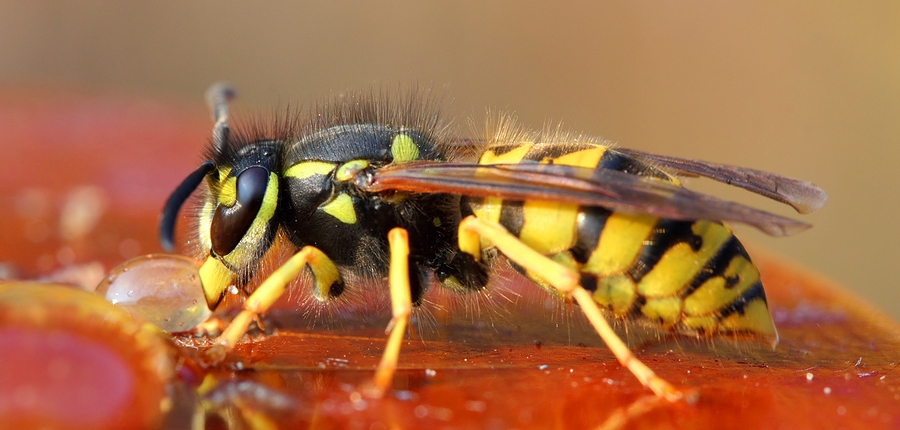
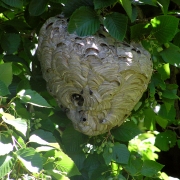
Wasps make their nests from chewed wood pulp and saliva, giving them distinctive papery walls.
Nests are usually built in sheltered spots with easy access to the outside. You can often find wasp nests in wall cavities, roof spaces, under eaves, in bird boxes, sheds or garages.
To locate a nest, carefully watch the flight path of the returning wasps, this becomes easier later in the summer as the numbers of wasps increase.
At first, a wasp nest will start off very small.
When a Queen wasp starts to build a nest in spring it is usually about the size of a walnut or golf ball.
As summer progresses the nest will grow rapidly in size as the number of wasps increase. A nest can become the size of a football, or even bigger in some cases.
It is best to treat a nest earlier in the year before numbers increase and the wasps become more aggressive.
It is possible to confuse wasps with bees. However the treatment available for a wasp nest and a bee hive differ.
Treatments for a wasp nest are far more common and can be carried out professionally by Our Wasp Nest Removal experts, quickly and safely.
Some facts about wasps
We all know that wasps can sting repeatedly, but here are some facts about wasps which you may not know.
1. The venom in wasps contains a pheromone that causes other wasps to become more aggressive. Try not to swat one near its nest or other wasps.
2. The sting of a wasp should wear off within 24 hours but for a small minority of people the venom in their sting causes anaphylactic shock which can be fatal.
3. An ordinary sting can be treated with deodorant containing aluminium.
4. Wasps live in colonies that form self-contained communities, each following a caste order of queens, males and workers.
5. A male wasp is called a Drone. The job of the Drone is to mate with the Queen. After they have fulfilled this mission, they die shortly afterwards.
6. Wasps don’t swarm.
7. European Hornets strip the bark from trees, causing damage to trees and shrubs.
8. Wasps feed their young meat e.g. insect larvae.
9. The only wasps that survive the winter are young fertilised queens. They emerge from overwintering in the spring to build new nests. Initially the queen lays up to a dozen eggs and when they hatch into larvae she feeds them until they become workers. The workers then forage for food, feed the new larvae and defend the nest.
10. In late summer, the colony produces males and new queens. They fly away to mate and the queens then find a place to hibernate. The cold weather eventually kills the males,